

If someone in your city types taxi near me or airport limo service into Google right now, does your business show up on the map. For most transportation companies the honest answer is no. Thousands of taxi and limo owners around the world are losing bookings every single day because their competitors show up first on Google Maps and they never even knew there was a way to change that. This guide walks you through exactly what it takes to move your transportation business toward the top of the map results and keep it there.
Why Google Maps Matters More Than You Think
When a customer needs a ride they rarely scroll through pages of a search engine anymore. They open Google, they type a quick search, and they call or book whichever business appears in that small map section at the top of the page. This is called the local pack and for transportation businesses it is often the single biggest source of new customers. A limo company with a beautiful website but no visibility on the map is still invisible to most of the people looking for a ride today.
This matters everywhere. A taxi company in Karachi, a limo service in Toronto, and an airport transfer business in Dubai are all fighting for the exact same three spots on the map for their city. The businesses that win are not always the biggest ones. They are the ones that understand how Google decides who to show first.
What Local SEO Actually Means for a Taxi or Limo Business
Local SEO is the process of telling Google, in a way it trusts, that your business is real, active, close to the customer, and genuinely good at what it does. Google looks at three main things when deciding map rankings. The first is relevance, meaning how well your business matches what the person searched. The second is distance, meaning how close your listed location is to the searcher. The third is prominence, meaning how well known and trusted your business appears to be based on reviews, links, and overall online activity.
You cannot control distance since that depends on where the customer is standing. But relevance and prominence are almost entirely in your hands, and that is where the real opportunity is.
Step One: Build a Google Business Profile That Google Actually Trusts
Your Google Business Profile is the single most powerful tool you have for map rankings, and most transportation companies set it up once and never touch it again. Start by choosing the correct primary category such as taxi service, limousine service, or airport shuttle service, and add every secondary category that genuinely applies to your business.
Fill in your business description using natural language that a real customer would read, mentioning your city, the areas you serve, and the type of transportation you provide. Add your real phone number, your service area, your hours, and photos of your actual vehicles and drivers rather than stock images. Google rewards profiles that look complete and human, and it quietly pushes down profiles that look abandoned or copied.
Post updates on your profile regularly. A short post about a new airport route, a seasonal offer, or a fleet update tells Google that your business is active right now, not just a listing that was created years ago and forgotten.
Step Two: Build a Website That Backs Up Your Map Listing
Your website and your Google profile need to tell the same story. If your profile says you offer airport transfers but your website never mentions airport transfers, Google notices the gap. Every core service you offer, whether that is corporate travel, wedding limo service, or point to point taxi rides, deserves its own clear page on your website with the city name mentioned naturally in the content.
Speed matters just as much as content. A slow website that takes several seconds to load will lose bookings before a visitor even reads a word, and Google factors that experience into how it ranks you. Make sure your site loads quickly on a phone, since most people searching for a ride are doing it on the move.
Step Three: Reviews Are the Fastest Way to Build Trust
Reviews are one of the strongest signals Google uses to decide who deserves the top spots, and they also convince a nervous customer to actually book a ride with you. After every trip, ask the customer directly for a review while the experience is still fresh, and make it easy by sending a direct link to your review page through text message.
Reply to every review, good or bad, in a calm and professional tone. A business that responds to a negative review with patience and a genuine offer to fix the issue often looks more trustworthy than a business with only five star reviews and no replies at all.

Step Four: Get Listed Everywhere Your Customers Already Look
Citations are simply mentions of your business name, address, and phone number on other websites such as local directories, travel sites, and industry specific platforms for transportation companies. The key rule here is consistency. Your business name, address, and phone number should look exactly the same on every single listing across the internet, because Google treats mismatched information as a trust problem.
Look for directories that are specific to your industry and your country, since a taxi directory or transportation association listing often carries more weight than a generic global directory that every type of business uses.
Step Five: Create Content That Answers Real Questions
The businesses that show up in Google AI overviews and get chosen by voice assistants are the ones that answer real questions clearly and completely. Instead of writing vague marketing pages, write content around the exact questions your customers already ask, such as how much does an airport transfer cost, what is the best way to book a wedding limo, or how far in advance should a corporate car be reserved.
Write in plain, natural language the same way you would explain something to a customer standing in front of you. Avoid stiff corporate phrasing and avoid stuffing the same keyword over and over, since both Google and real readers can tell when content was written for a machine instead of a person.
Step Six: Track What Is Actually Working
Local SEO is not something you set up once and forget. Check your Google Business Profile insights every month to see how many people found you through search versus maps, how many called, and how many asked for directions. Watch your position for your most important search terms in your city and adjust your content and your profile based on what the data actually shows you rather than guessing.
Final Thoughts
Ranking number one on Google Maps is not about a single trick or a shortcut. It comes down to building a business profile Google trusts, a website that matches what you actually offer, a steady stream of genuine reviews, consistent listings across the web, and content that answers the questions real customers are asking. Transportation businesses that commit to these steps consistently, whether they operate in a small town or a major international city, are the ones that end up owning the top of the map.
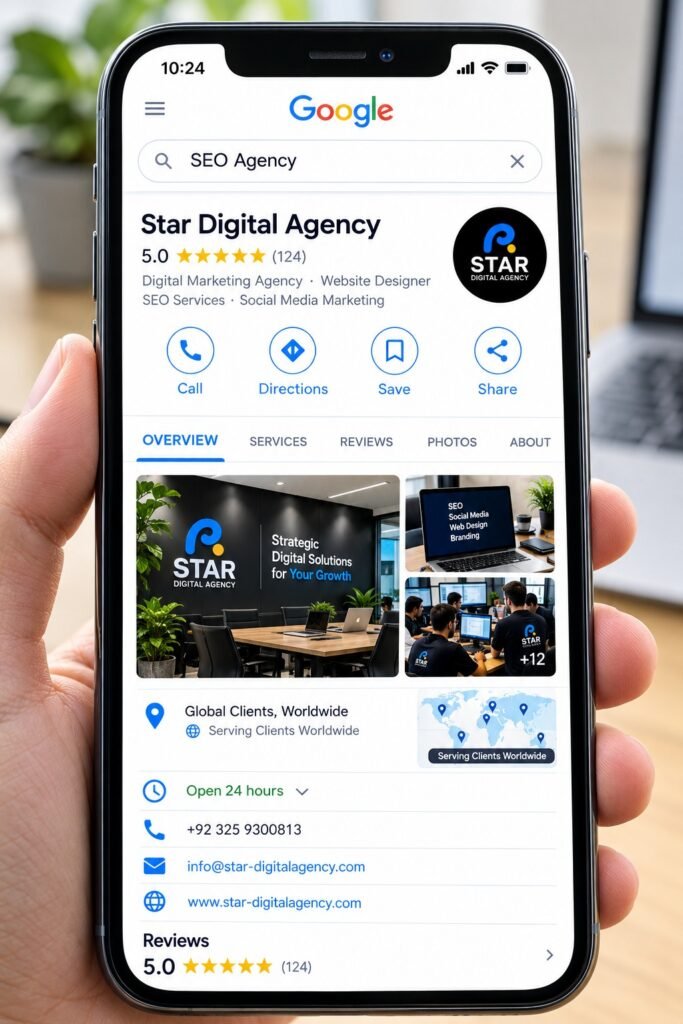
At Star Digital Agency we help taxi, limo, and transportation businesses around the world build exactly this kind of local visibility, from setting up a search ready website to managing a Google Business Profile that brings in real bookings every week.