

Ask ten taxi and limo owners around the world where their business lives online and most of them will point to a Facebook page. It feels easy, it feels free, and it feels like enough. But customers today search on Google first, compare businesses that show up with a proper website first, and quietly skip past the ones that only have a social media page. If your entire online presence still lives inside Facebook in 2026, you are not just missing bookings, you are handing them straight to a competitor who took the website seriously.
Facebook Was Never Built to Be Found
Facebook is a social platform, not a search engine. When someone searches Google for airport transfer service in their city, a business with a real website has a genuine chance of showing up in the results. A Facebook page rarely appears in the same way, and even when it does, it carries far less trust than an actual website with its own domain. Customers searching with real intent to book a ride are searching on Google, not scrolling their Facebook feed hoping to stumble across a transportation company.
A Website Works Even When You Are Not Online
A Facebook page depends entirely on the algorithm deciding to show your post to people, and that reach has been shrinking for years unless you pay to boost it. A website has no such gatekeeper. Once it is built and set up correctly, it keeps working around the clock, answering questions, showing your services, and accepting bookings while you are asleep, driving a client, or handling something else entirely. This difference alone can be the reason one company grows steadily while another stays stuck at the same size for years.
Customers Trust a Website More Than a Page
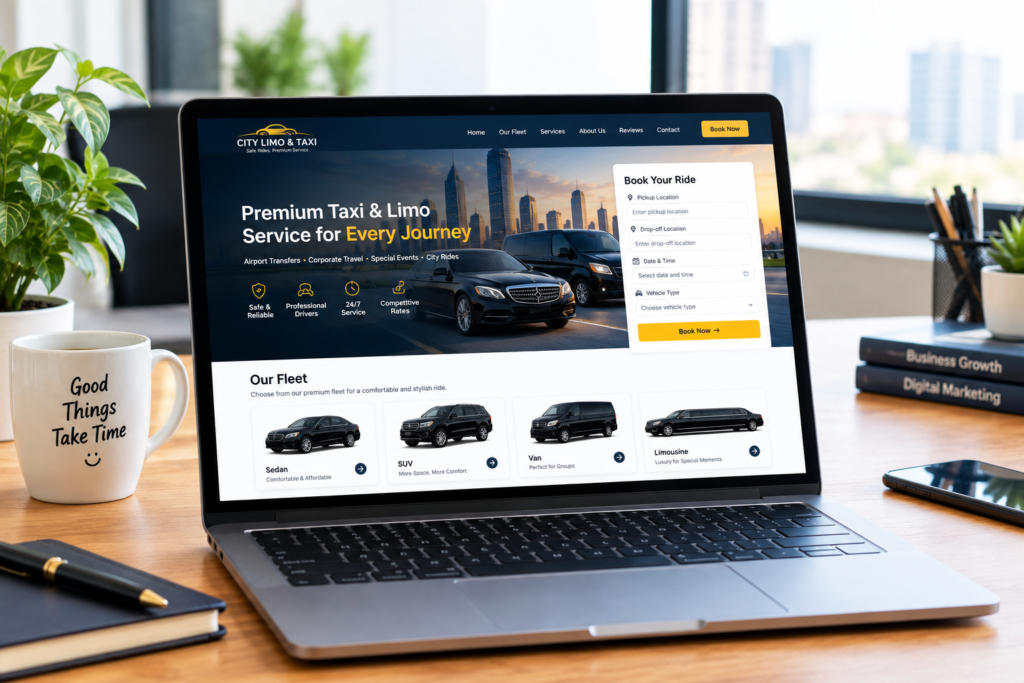
There is a quiet psychological gap between a business with only a Facebook page and one with a proper website. A dedicated website with your own domain name signals that the business is established, professional, and serious about the service it provides. Corporate clients in particular, the ones booking regular airport transfers or executive travel, almost always check for a website before trusting a transportation company with their account. Without one, you may be silently disqualified before a decision maker even picks up the phone.
You Own a Website. You Do Not Own Your Facebook Page
This point gets overlooked far too often. A Facebook page can be restricted, suspended, or permanently disabled by the platform at any time, sometimes without a clear reason and often without a real way to reach a human for help. Years of reviews, photos, and followers can disappear overnight and there is very little a business owner can do about it. A website that you own and control cannot be taken away by a platform’s policy change or an automated system flag.
A Website Lets You Show What Facebook Cannot
Facebook limits how you present your business to a fixed template that looks the same as every other page on the platform. A website lets you build dedicated pages for each service, whether that is wedding limo rentals, corporate travel, or airport pickups, each written and structured around what that specific customer is searching for. You can add a booking form, live pricing information, a fleet gallery, and customer testimonials in a layout designed entirely around your brand instead of a generic blue and white template shared by billions of other pages.
Search Engines Reward Businesses With Websites
Local search ranking factors are built around signals a website provides, including page content, loading speed, mobile experience, and structured business information. A business without a website is missing one of the strongest ranking signals available and is essentially competing with one hand tied behind its back against companies that took the time to build one. Even a simple, well built website gives Google far more reason to trust and rank a transportation business than a Facebook page alone ever could.
A website also lets a business connect its Google Business Profile to something real. Google checks whether the information on a profile matches what is written on the linked website, and a mismatch or a missing website altogether can quietly weaken how much trust Google places in that profile. Businesses that keep both aligned tend to hold their map position far more consistently over time than those relying on a profile with no website behind it.
A Website Turns Visitors Into Bookings Automatically
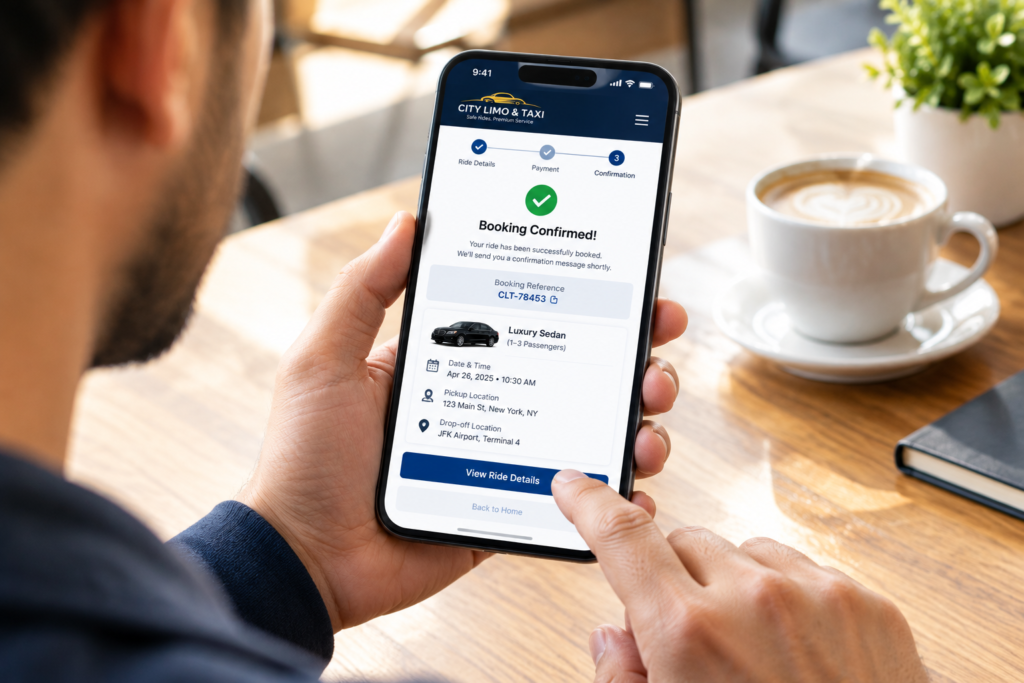
On Facebook, a potential customer has to message you, wait for a reply, and go back and forth before a booking is even confirmed. A website can include a direct booking form, instant pricing calculator, or a click to call button that lets a customer take action the second they decide to book, without waiting on a reply. In an industry like transportation, where customers often need a ride booked quickly, this instant response ability can be the deciding factor between winning the booking and losing it to a competitor who answered faster.
This Applies Everywhere in the World
This is not limited to any single country or city. A taxi company in Lahore, a limo service in London, and an airport shuttle business in Toronto are all competing against businesses that already understand this shift. Customers everywhere are searching on Google first, whether they are booking a ride to a wedding, an airport, or a corporate meeting, and the businesses that show up with a real website are the ones consistently winning those bookings over a Facebook only competitor.
The size of the city does not change this pattern either. Even in smaller towns where word of mouth once carried most of the business, younger travelers and corporate clients still default to a quick Google search before making a call. A transportation business that skips a website is betting its entire future on a habit that fewer and fewer customers actually follow anymore.
A Website Also Protects You From Seasonal Slowdowns
Transportation businesses often deal with busy seasons around holidays, weddings, and travel peaks, followed by quieter months where bookings slow down. A website with useful content built around these seasons, such as a page about holiday airport transfers or wedding season limo packages, keeps bringing in search traffic long after a single Facebook post has been buried under newer content. This steady, ongoing visibility is something a social media page simply cannot replicate on its own.
Building One Does Not Have to Be Expensive or Complicated
Many owners avoid building a website because they assume it requires a large budget or months of technical work. In reality, a clean, fast, mobile friendly website with the core pages a transportation business actually needs, including a homepage, a services page, a fleet page, and a contact or booking page, can be built and launched in a matter of days when it is planned correctly. The investment pays for itself quickly once it starts turning steady search traffic into real bookings instead of relying entirely on Facebook reach that keeps shrinking every year.
Final Thoughts
A Facebook page can still be useful for daily updates and staying connected with existing customers, but it was never designed to be a business headquarters. In 2026, a transportation business without a real website is invisible to the exact customers actively searching for a ride right now, and is trusting its entire online reputation to a platform it does not own or control. Building a proper website is no longer optional for a transportation company that wants to grow, it is the foundation everything else, including local SEO, reviews, and bookings, is built on top of.
At Star Digital Agency we build fast, search ready websites for taxi, limo, and transportation businesses around the world, giving owners a real digital home that keeps working long after a Facebook post has disappeared from anyone’s feed.