

Many transportation business owners want to improve their SEO but have no idea which actual words and phrases to target. Guessing at keywords wastes time and often leads to content that nobody is searching for in the first place. This guide breaks down seven proven keyword categories that consistently drive real bookings for taxi, limo, and shuttle businesses, along with how to actually use each one across a website and Google Business Profile.
One: City Plus Service Keywords
The most fundamental keyword pattern for any transportation business combines the city or area served with the core service offered, such as taxi service in your city or limo rental in your city. These terms carry strong local intent, meaning the person searching is very likely ready to book rather than just browsing. Every core service page on a website should naturally include this pattern in the page title, the opening paragraph, and at least one heading.
Two: Near Me Searches
Phrases like taxi near me or airport shuttle near me have become some of the most heavily searched terms in local business categories worldwide, largely because most searches now happen on a phone with location services turned on. While a business cannot directly force ranking for near me searches, a fully optimized Google Business Profile with an accurate service area is what actually determines whether a business appears for these highly valuable, high intent searches.
Three: Airport Transfer Keywords
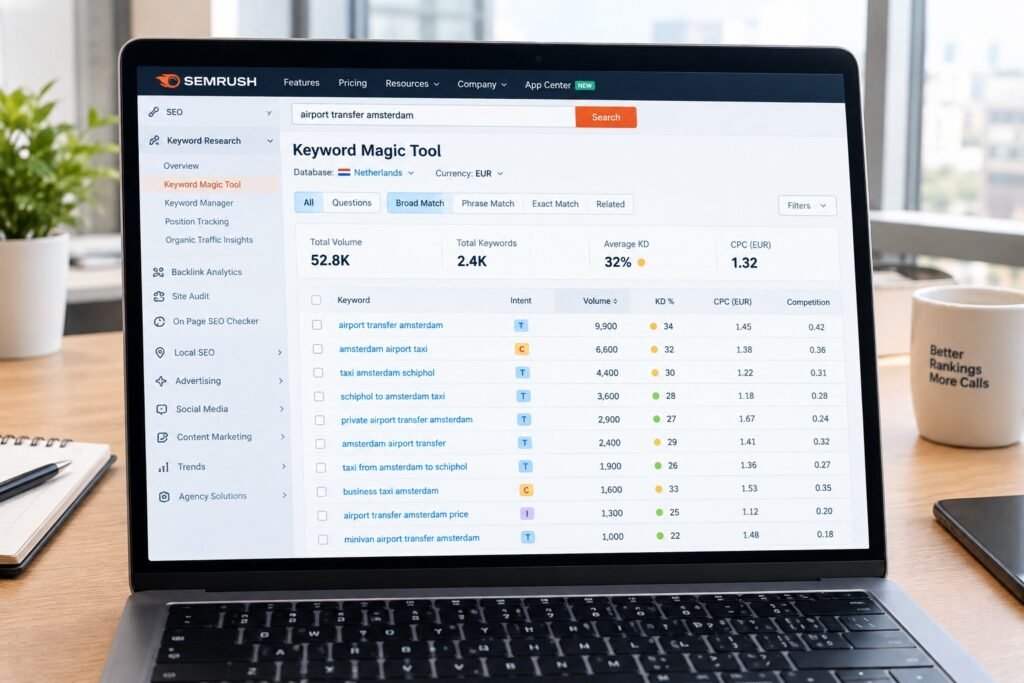
Airport related searches represent one of the most consistent and valuable keyword categories for transportation businesses everywhere in the world. Terms such as airport transfer service, airport pickup, and airport car service carry strong commercial intent since the person searching almost always needs a ride booked soon. A dedicated page built specifically around airport transportation, including pricing expectations and booking information, tends to perform far better than trying to cover this topic briefly on a general homepage.
Four: Event and Occasion Based Keywords
Searches tied to specific events, such as wedding limo rental, prom limo service, or corporate event transportation, attract customers with a clear and immediate need rather than casual browsers. These keywords also tend to have less competition than broader terms, making them a valuable opportunity for smaller transportation businesses to rank for meaningful traffic without competing directly against the largest companies in the market.
Five: Comparison and Decision Based Keywords
Many customers search using comparison phrases before making a decision, such as taxi versus rideshare cost or best way to get to the airport. Content built around these decision stage questions, answered honestly and clearly, tends to build significant trust and often gets featured in AI generated search summaries, since these tools favor content that directly and clearly answers a genuine question rather than vague promotional language.
Six: Pricing and Cost Related Keywords
Searches like how much does a taxi cost or airport transfer pricing are extremely common, yet many transportation businesses avoid mentioning pricing on their website out of hesitation. A page that gives a clear price range, even an approximate one, tends to rank well for these searches and builds trust with customers who appreciate transparency, rather than losing that traffic entirely to a competitor willing to be upfront about cost.
Seven: Corporate and Business Travel Keywords
Terms such as corporate car service, executive transportation, or business travel car service target a higher value customer segment that often books repeat, ongoing service rather than a single ride. A dedicated page addressing this audience specifically, including details about account billing, reliability, and professionalism, helps a transportation business capture this more lucrative segment instead of blending it into general marketing meant for everyday customers.
How to Actually Use These Keywords
Once these keyword categories are identified, the next step is placing them naturally throughout a website rather than repeating them mechanically in every sentence. Each keyword category deserves its own dedicated page whenever possible, written in plain language that reads naturally to an actual customer while still directly addressing the exact term being targeted. Titles, headings, and the opening paragraph of each page are the most important places to include the target phrase clearly and naturally.
These same keyword categories should also guide the content added to a Google Business Profile through regular posts and an updated business description, since consistency between a website and a profile reinforces relevance for both in the eyes of search engines.
It also helps to think about search intent behind each keyword rather than just the words themselves. A search for taxi near me usually signals someone who wants to book within minutes, while a search for how much does an airport transfer cost usually signals someone still comparing options. Matching the tone and content of a page to that underlying intent, rather than treating every keyword the same way, tends to produce far better results.
Why These Seven Categories Work Everywhere
A taxi company in Dubai, a limo service in New York, and a shuttle business in Manchester are all searched for using this same basic pattern of keywords, since customer behavior around booking transportation remains remarkably consistent across countries and cultures. The specific city names and local competition will differ, but the underlying keyword categories covered here apply to virtually any transportation business anywhere in the world.
Language and phrasing may shift slightly from one country to another, since a customer in one region might search using different wording than a customer in another, even when searching for the exact same service. Paying attention to the specific phrasing common in a particular market, rather than assuming every country searches the same way in English, can meaningfully improve how well content performs locally.
Avoid the Trap of Keyword Stuffing
While targeting the right keywords matters, repeating the same phrase excessively throughout a page does more harm than good, since both search engines and real readers can easily recognize content that was written for a machine rather than a person. The goal is covering each topic thoroughly and naturally, allowing the relevant keywords to appear where they genuinely fit rather than forcing them into every single sentence.
A simple test is reading a finished page out loud. If a sentence feels awkward or repetitive because a keyword was forced into it, that sentence needs to be rewritten in a more natural way. Search engines have become increasingly good at recognizing genuinely helpful writing, and content that passes this simple read aloud test is usually already on the right track.
Track Which Keywords Are Actually Working
After publishing content built around these keyword categories, checking search performance data every month reveals which terms are genuinely bringing in visitors and which ones may need a different approach. This ongoing review, rather than a one time keyword list created and forgotten, is what allows a transportation business to keep refining its content toward the terms that actually convert into real bookings over time.
Final Thoughts
Choosing the right keywords is one of the highest leverage activities a transportation business can invest time into, since it determines exactly which searches a website has a real chance of appearing for. Building dedicated, well written content around city plus service terms, near me searches, airport transfers, event based occasions, comparison questions, pricing, and corporate travel gives a transportation business a strong and well rounded foundation for consistent, long term visibility in search results.
At Star Digital Agency we research and build keyword focused content exactly like this for transportation businesses around the world, turning the right search terms into pages that genuinely rank and convert into real bookings.