

Every small transportation business owner eventually reaches the same question. Should the marketing budget go toward local SEO, or is it smarter to run paid ads and get customers showing up right away. Both options can genuinely work, but they work in different ways, over different timelines, and for different stages of a business. This guide breaks down exactly how local SEO and paid ads compare for a taxi, limo, or shuttle business, so you can decide where your money actually belongs instead of guessing.
What Local SEO Actually Means for a Transportation Business
Local SEO is the ongoing process of improving how your business shows up in Google search results and Google Maps for people searching nearby, such as someone typing taxi service near me or airport limo in their city. This includes optimizing your Google Business Profile, building a proper website, earning genuine customer reviews, and creating content that answers the questions your customers are already asking. None of this involves paying Google directly for a click. Instead, you are earning your position through consistency and trust built over time.
What Paid Ads Actually Means for a Transportation Business
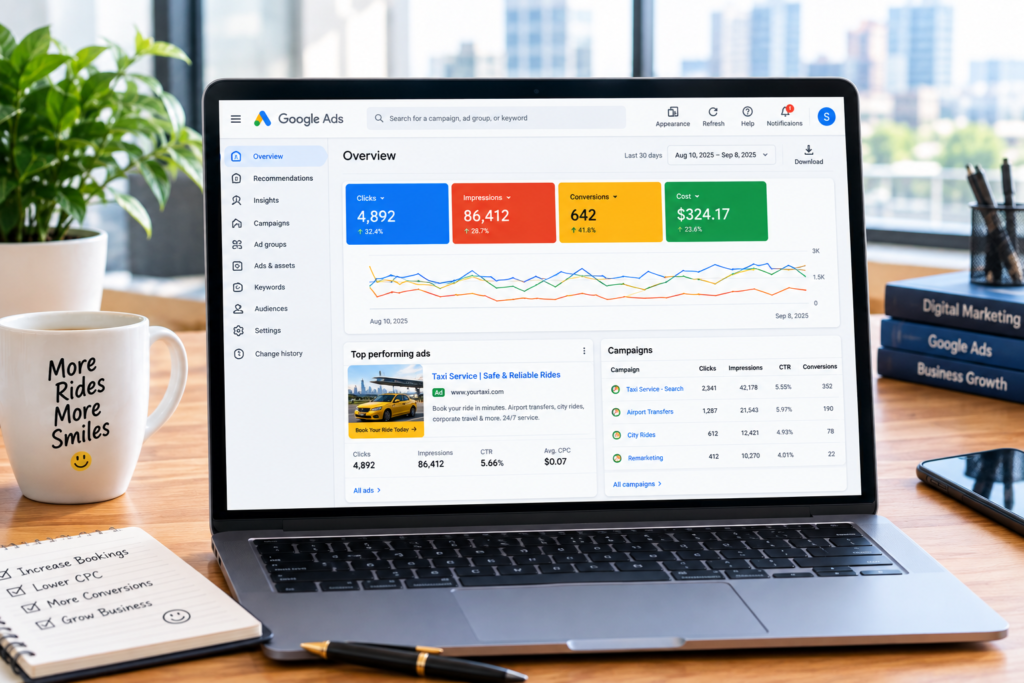
Paid ads, most commonly through Google Ads or social media platforms, involve paying for your business to appear at the very top of search results or inside someone’s social feed the moment they search a relevant term or match your target audience. The business pays for every click or every set of impressions, and the visibility disappears the instant the budget runs out. There is no waiting period involved, since a well set up campaign can start sending calls and bookings within hours of going live.
Speed: Paid Ads Win in the Short Term
If a transportation business needs bookings this week, paid ads are almost always the faster option. A campaign targeting airport transfer near me or corporate car service can start appearing at the very top of search results the same day it launches, well above where any organic listing could reach naturally. For a brand new business with zero reviews and no existing online history, this speed can be the difference between surviving the first few months or running out of cash before organic traffic has a chance to build.
Cost Over Time: Local SEO Wins in the Long Run
Paid ads cost money for every single click, and that cost never disappears. A transportation business running ads for years will keep paying the same ongoing fee for each new customer indefinitely. Local SEO works differently. Once a Google Business Profile is fully optimized, a website is built correctly, and a strong base of reviews is in place, that visibility keeps generating calls and bookings without paying for each individual click. The upfront effort is higher, but the long term cost per customer drops significantly compared to an ad campaign that never stops needing fresh budget.
Trust: Customers Behave Differently Toward Each One
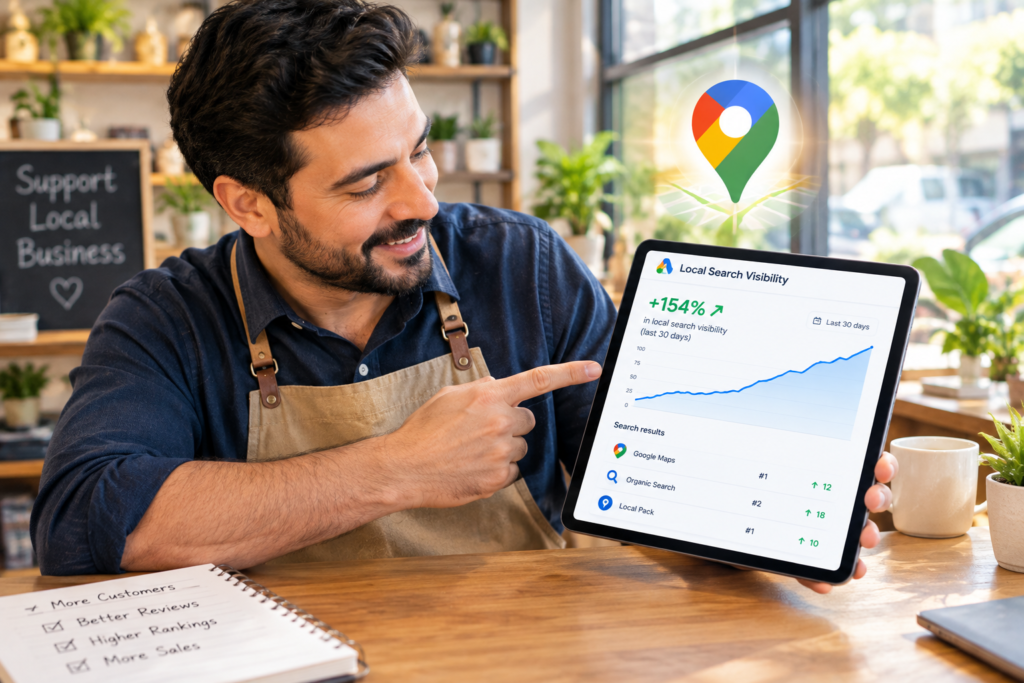
Many customers, particularly for a decision like booking a ride, have learned to recognize the small ad label next to a paid listing and instinctively scroll past it toward the organic results below. A business that ranks naturally in the map pack or the search results often earns more trust simply because it was not paid for. This does not mean ads are ineffective, but it does mean local SEO tends to convert a certain type of cautious customer that paid ads alone may never fully reach.
Longevity: What Happens When the Budget Stops
This is one of the most important differences and one that is often overlooked. The moment a paid ad budget runs out, all of that visibility disappears immediately, as if the business was never advertising at all. Local SEO behaves completely differently. A well built Google Business Profile, a website full of useful content, and a strong review history continue working and bringing in customers even during a month when the business owner has no budget to spend at all. This makes local SEO far more resilient during slow seasons or unexpected cash flow gaps that most small transportation businesses eventually face.
Which One Should a New Business Start With
A brand new transportation business with no reviews, no website history, and no existing visibility often benefits from running a small, carefully targeted ad campaign in the first few months while local SEO groundwork is being built in the background. This combination lets a business start receiving bookings almost immediately through ads while the Google Business Profile matures, reviews accumulate, and the website starts earning its own organic visibility. Relying on ads alone forever, without ever investing in SEO, means the business will always depend on a budget just to stay visible.
A helpful approach for a new business is setting a small, fixed ad budget covering only the first three to six months, with a clear plan to invest the same energy into local SEO during that exact window. This keeps the business from drifting into permanent dependence on ads while still giving it enough visibility to survive the early period before organic rankings have time to mature.
Which One Makes Sense for an Established Business
A transportation business that has already been operating for a year or more, with a reasonable number of reviews and an existing customer base, typically gets more long term value from doubling down on local SEO. At this stage, the foundation already exists to build on, and every improvement to the Google Business Profile, website content, and review strategy compounds over time. Paid ads can still be used strategically for specific goals, such as promoting a seasonal offer or targeting a new service area, without needing to carry the entire marketing effort alone.
The Businesses That Win Usually Use Both
In practice, the transportation businesses that grow the fastest rarely choose one approach and ignore the other completely. They use paid ads for immediate, specific goals, such as launching in a new city or filling gaps during a slow season, while continuously investing in local SEO as the steady, reliable foundation running underneath everything else. Over time, the reliance on paid ads naturally decreases as organic visibility grows strong enough to carry a larger share of the bookings on its own.
A practical way to think about this is treating paid ads as rented visibility and local SEO as owned visibility. Rented space disappears the moment payment stops, while owned space keeps belonging to the business indefinitely. Smart transportation companies use the rented space to survive early growth stages while steadily building the owned space that eventually carries most of the weight.
This Comparison Applies Everywhere, Not Just One Market
A taxi company in Manchester, a limo service in Dallas, and a shuttle business in Karachi all face this exact same decision, regardless of local competition or market size. The fundamentals of how Google ranks businesses and how customers respond to ads versus organic results remain consistent across countries and cities. What changes from market to market is simply how much competition exists for the same keywords, which affects how much a business may need to lean on ads early on while local SEO catches up.
Final Thoughts
There is no single correct answer for every transportation business, since the right mix depends on how new the business is, how much budget is available right now, and how quickly bookings are needed. Paid ads deliver speed but stop working the moment spending stops, while local SEO takes longer to build but keeps generating bookings long after the initial effort is complete. The smartest approach for most small transportation businesses is treating local SEO as the long term foundation and using paid ads as a targeted tool for specific short term goals along the way.
At Star Digital Agency we help transportation businesses build exactly this kind of balanced strategy, combining strong local SEO foundations with targeted ad campaigns so owners get both immediate bookings and lasting visibility that keeps working long after a campaign ends.