

By Star Digital Agency, November 2026, 8 minute read
Taxi company branding that wins bookings comes down to 4 things done consistently: a name passengers can remember and spell, 2 main colours used everywhere, one logo on every car and page, and drivers who look like they belong to the same firm. Passengers choose a taxi company in seconds — from a search result, a car passing on the street, or a recommendation from a friend — and branding is what makes your firm recognisable in that split second. This guide covers naming, colours, logo use, fleet look, uniforms, and how all of it turns one-off rides into repeat bookings.
What Makes a Taxi Company Brand Memorable?
A memorable taxi brand is simple, consistent, and visible in the places passengers actually look. Simplicity matters because passengers rarely study a brand — they glance at it. A name they can say on the phone, colours they can spot from across a street, and a logo they can recognise on a car door are worth more than a clever concept nobody remembers.
Consistency matters even more. If your cars carry one look, your website another, and your social pages a third, passengers cannot connect them — and every sighting of your brand fails to build on the last one. A strong brand repeats the same name, colours, and logo everywhere: cars, website, Google profile, uniforms, booking confirmations, and receipts. After 3 or 4 sightings, a passenger who has never booked with you starts to feel like they already know your firm. That familiarity is what turns a search result into a first booking, and a first booking into a habit.
Visibility is the third piece. Branding only works if it is seen: on the road, on Google, and in the passenger’s phone. A beautiful logo locked in a drawer wins nothing. This guide works through each piece in the order that matters — name first, then colours, then logo, then fleet, then people.
How Do You Choose a Name for a Taxi Company?
Your name is the hardest part of your brand to change later, so choose it carefully. A good taxi company name passes 5 tests:
1. Easy to say and spell. A passenger should be able to tell a friend your name over the phone, and that friend should be able to type it into Google and find you first time. If people regularly misspell it, you are losing bookings to competitors.
2. Tied to your place or service. Names that include your town, or a clear service word like “cars”, “cabs”, or “airport”, help passengers instantly understand what you do and where you work. A name that could belong to any business anywhere does neither job.
3. Available everywhere. Before you commit, check 4 places: the domain name, your Google Business Profile name, your social media handles, and the local business register. A name that is taken on Google or social media will cause confusion for years. Secure the matching domain and handles before you print anything.
4. Room to grow. A name tied to one tiny area or one vehicle type can box you in later. If you may expand into neighbouring towns or add executive cars, pick a name that still fits when you do.
5. Distinct from competitors. Search your town plus “taxi” and read the names already in use. If 3 firms have similar names, yours needs to stand apart — confused passengers book the wrong firm, and that firm keeps the fare.
If you already have a name that fails 2 or more of these tests, do not panic — a rebrand is possible, but plan it carefully, update every listing at once, and tell existing customers clearly. Our local SEO playbook for taxi companies covers keeping your listings consistent through a change like that.
What Colours Work Best for a Taxi Company Brand?
Colour is the fastest way passengers recognise your firm. A car in your colours, seen from a distance, should read as your company before anyone can read the name. That means 2 main colours — a dark base and one bright accent — used consistently everywhere.
Pick colours with contrast. Dark plus bright works: black with yellow, navy with white, dark green with gold. The combination must stay readable on a car door, on a phone screen, and on a printed receipt. Test your colours at small sizes and in poor light — a combination that looks smart on a designer’s screen but disappears on a grey street is the wrong choice.
Match the colours to the feeling you want. Bright, warm colours suggest friendly, everyday service. Dark colours with a metallic accent suggest executive or premium service. Neither is “better” — but the colours should match the passengers you serve. An executive chauffeur firm in loud novelty colours confuses its market, just as a budget airport shuttle in sombre black-and-silver undersells its value.
Use the same 2 colours everywhere. Cars, website, logo, uniforms, social pages, and booking emails should all carry the same pair. Every exception weakens recognition. When you are tempted to add a third colour for a special occasion, resist it — a one-off colour scheme teaches passengers nothing about your brand.
Check visibility and safety. Your colours must stay visible at night and in rain, because that is when many passengers need you most. Reflective elements and strong contrast are not just branding choices — they help passengers spot their car and help drivers stay visible on the road.
How Do You Use a Logo Across Your Taxi Business?
A logo is not a decoration — it is the shortcut passengers use to recognise you. A good taxi logo is simple enough to read on a moving car door, works in one colour as well as full colour, and still reads clearly at the size of a phone icon. If your logo needs explaining, it is too complicated.
Once you have it, use it everywhere, in the same form, every time. That means:
- Cars: the same logo, same size, same position on every vehicle. A fleet where each car carries a different version of the logo looks like several small firms, not one strong one.
- Website and Google profile: the same logo as your profile picture and site header, so a passenger moving from search to website sees the same mark and trusts they are in the right place.
- Uniforms and documents: the logo on driver shirts, booking confirmations, invoices, and receipts — every touchpoint a passenger sees after booking should confirm they chose the right firm.
- Social media: the same logo as your avatar on every platform, so a passenger who finds you on one platform recognises you instantly on another.
Two rules protect your logo’s value. First, never stretch, recolour, or redraw it to fit a space — a distorted logo looks unprofessional and teaches passengers the wrong version of your mark. Second, keep one master file of the logo in high quality, and use copies of it everywhere. When someone needs the logo — a designer, a printer, a website builder — give them the master file, not a screenshot from your website. If your website still carries an old logo or old colours, our web design services can bring it in line with the new brand, and a specialist taxi website design company will know how to keep the booking flow intact while doing it.

What Does a Consistent Fleet Look Do for Bookings?
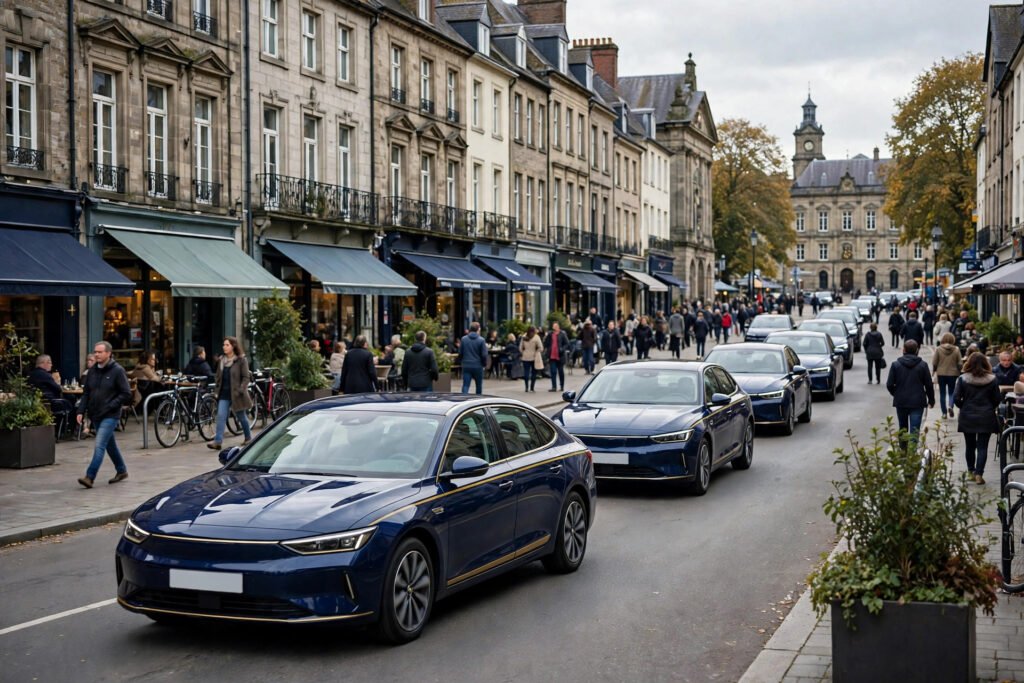
A consistent fleet look turns every car on the road into an advert for your firm. When 5 of your cars, all in the same colours with the same logo, pass through a town centre in a day, passengers start to notice — and a firm that looks big and organised feels safer to book than one whose cars all look different.
Consistency also builds trust at pickup. A passenger waiting outside a hotel or station, scanning for their car, feels reassured when the arriving vehicle matches the branding they saw when booking. That moment of recognition reduces no-shows, reduces anxious phone calls to your office, and makes the whole pickup smoother.
Keeping a fleet consistent takes discipline, not money. Set 3 standards and hold them: the same logo placement on every car, the same colour scheme with no personal additions, and a cleanliness standard every driver meets before a shift. New cars joining the fleet get branded before their first job, not “when we get round to it”. A single unbranded or differently branded car in the fleet undermines the whole effect — passengers notice the odd one out.
For firms growing from 2 cars to 10, fleet consistency is also a hiring signal: drivers take pride in a fleet that looks professional, and professional-looking firms attract better drivers. Branding, in other words, works on both sides of the business.
Should Taxi Drivers Wear Uniforms?
Uniforms are not about formality — they are about instant recognition and trust. A passenger meeting a stranger for a ride wants to know, within seconds, that this is the right driver from the right firm. A branded shirt or jacket answers that question before a word is spoken.
Keep uniforms simple: a shirt or polo in your brand colours with your logo, plus a clean, smart standard for the rest — dark trousers, tidy shoes. Drivers need to be comfortable for long shifts, so choose breathable fabrics and allow a branded jacket for cold weather. The goal is a driver who looks like part of a team, not a driver in a costume.
Uniforms also help your drivers. A driver in a branded shirt is treated as a professional, not a random stranger, and passengers behave accordingly. And when a driver helps with luggage or waits at an airport arrivals board, the uniform tells everyone nearby which firm they represent — free visibility in exactly the places your next passengers are standing.
One caution: a uniform policy only works if it is actually enforced. A branded shirt worn by half the fleet, half the time, is worse than no uniform at all, because it signals a firm that does not follow its own standards. If you introduce uniforms, introduce them for everyone, from day one.
How Does Branding Build Trust and Repeat Bookings?
Trust is the real product branding sells. A passenger hands a stranger their safety, their luggage, and their schedule — and they choose the firm that feels most reliable. Branding builds that feeling in 3 ways.
Recognition breeds familiarity. A passenger who has seen your cars, your logo, and your colours several times feels they already know your firm before the first booking. Familiar firms feel safer than unknown ones, and safer firms get the booking.
Consistency signals reliability. A firm whose cars, website, drivers, and messages all match looks organised. Passengers reason, quite fairly, that a firm careful about its appearance is likely careful about its service — punctual pickups, clean cars, polite drivers.
A clear brand makes recommending easy. Repeat bookings and referrals are where taxi firms make their money, and both depend on passengers remembering you. “Book the yellow-and-black cars, they’re called Riverside Cars” is a recommendation a friend can act on. “Book that taxi firm, I forget the name” is a booking lost. Make your firm easy to remember, easy to describe, and easy to find again — and passengers will do your marketing for you.
Tie it together online too: your taxi company Google Business Profile should carry the same name, colours, and logo as your cars, so a passenger who saw your fleet on the street and searches later finds the same firm. Branding and search visibility reinforce each other, and firms that get both right win twice.
The Bottom Line
Taxi company branding is not a luxury — it is the system that turns one-off passengers into repeat bookers. Pick a name that is easy to say, spell, and find. Choose 2 colours and use them everywhere. Put one logo on every car, page, and uniform without exception. Keep your fleet consistent and your drivers recognisable. Do those 5 things, and your firm will look bigger, feel safer, and be easier to recommend than competitors with bigger fleets but no brand at all.
That is the standard we build to at Star Digital Agency: a brand and a website that match, so passengers recognise you on the street and trust you on Google. If your cars, your website, and your Google profile currently tell 3 different stories, we can help you line them up.
Message us on WhatsApp for a free, honest chat and we will review your taxi company’s branding — name, colours, logo, and online presence — and tell you the first 3 fixes worth making.
Frequently Asked Questions
What is taxi company branding?
Taxi company branding is the consistent name, colours, logo, fleet look, and uniforms that make your firm recognisable to passengers. Done well, it helps passengers spot your cars, trust your firm, remember your name, and book with you again instead of choosing a competitor.
How do I choose a name for my taxi company?
Pick a name that is easy to say and spell, tied to your town or service, available as a domain name and on Google and social media, roomy enough to grow with, and distinct from competitors in your area. Check the domain, Google Business Profile name, and social handles before you commit to anything.
What colours should a taxi company use?
Use 2 main colours — a dark base and one bright accent — with strong contrast so they stay readable on a car door, a phone screen, and at night. Match the colours to the passengers you serve, and use the same pair everywhere: cars, website, uniforms, and social pages, with no exceptions.
Does a taxi company need a logo?
Yes. A simple logo that reads on a moving car door and at phone-icon size is the shortcut passengers use to recognise your firm. Use the same logo, unchanged, on every car, your website, your Google profile, uniforms, and documents — never stretch, recolour, or redraw it to fit a space.
Should taxi drivers wear uniforms?
Yes, a simple branded shirt or polo in your colours with your logo helps passengers instantly recognise the right driver and builds trust at pickup. Keep uniforms comfortable for long shifts, and enforce the standard for the whole fleet — a uniform worn by only half your drivers signals a firm that does not follow its own standards.
How does branding bring repeat taxi bookings?
Branding makes your firm easy to remember, easy to describe to friends, and easy to find again on Google. Recognition builds familiarity, consistency signals reliability, and a clear brand turns passengers into referrers — which is why firms with a strong, consistent brand win more repeat bookings than firms passengers cannot name.